President Cheng Haibo Leads Delegation to Visit the WHO Headquarters and SWISS TCM UNI
发布时间: 2026-07-31 浏览次数: 10


From July 20 to 22, President Cheng Haibo led a delegation to Switzerland on an official visit to the World Health Organization (WHO) headquarters and the Swiss University for Traditional Chinese Medicine (SWISS TCM UNI). The visit aimed to further expand Nanjing University of Chinese Medicine’s (NJUCM) collaborative network with international organizations and in the field of overseas education, as well as to promote the in-depth global cooperation and high-quality development of Traditional Chinese Medicine (TCM). The delegation was warmly received by Dr. Kim Sungchol, Head of the WHO Traditional, Complementary and Integrative Medicine (TCIM) Unit, and other key officials.
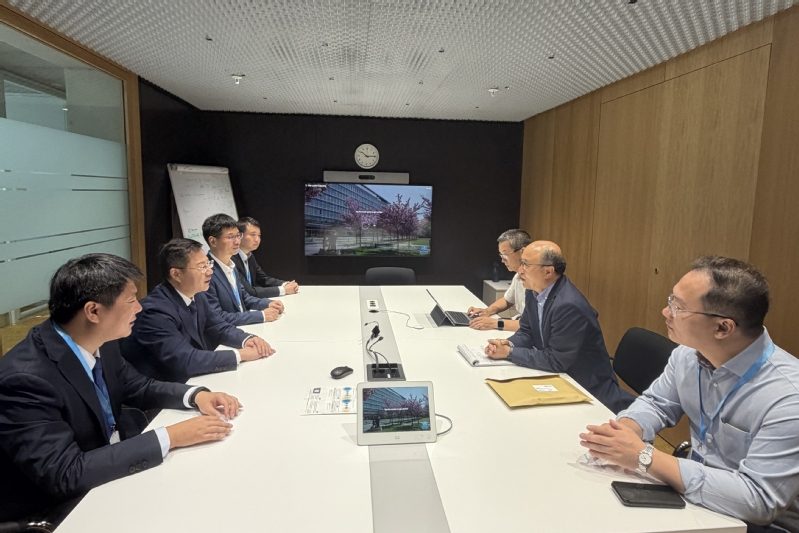

Visiting the WHO Headquarters


President Cheng expressed his gratitude to WHO for its guidance and assistance regarding the work of NJUCM as one of the WHO Collaborating Centres for Traditional, Complementary and Integrative Medicine, as well as its care and support for the university’s overall development. He stated that NJUCM, as a leading institution of higher education in TCM in China, has always regarded promoting the international spread of TCM and global collaboration in traditional medicine as a crucial mission. Over the years, relying on the high-end platform of the WHO Collaborating Centre, the university has deeply participated in the formulation of international standards for traditional medicine, global talent cultivation, and mutual academic exchanges, achieving highly positive results. Looking to the future, the university expects to further deepen practical cooperation with WHO, contribute NJUCM’s wisdom in broader fields and at higher levels, and jointly promote traditional medicine to play a greater role in the global health governance system, providing strong support for achieving global health governance and sustainable development goals.


Dr. KIM Sungchol welcomed President Cheng and his delegation, fully affirming the outstanding achievements made by NJUCM. He expressed his expectation that both sides could expand into more dimensions of cooperation based on the existing foundation, jointly advancing the standardized and globalized development of traditional medicine.


The two sides engaged in in-depth discussions on cooperation regarding the university’s fulfillment of its functions as one of the WHO Collaborating Centres for Traditional, Complementary and Integrative Medicine and the expansion of TCM’s international influence.


At SWISS TCM UNI, President Cheng Haibo and Prof. Li Yiming, Rector of SWISS TCM UNI, exchanged in-depth views and reached a broad consensus on topics such as scientific research cooperation, joint graduate training, and the sharing of academic resources in the field of TCM. This laid a solid foundation for the subsequent deepening of international cooperation between the two universities. During the visit, the two sides signed a Memorandum of Understanding (MoU), marking a substantive new stage in their cooperation across TCM education, research, and cultural exchange.
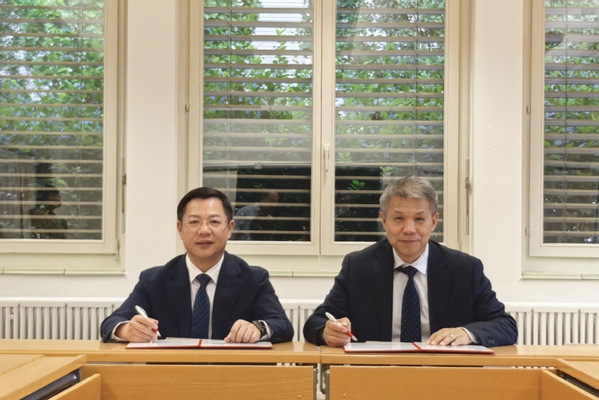
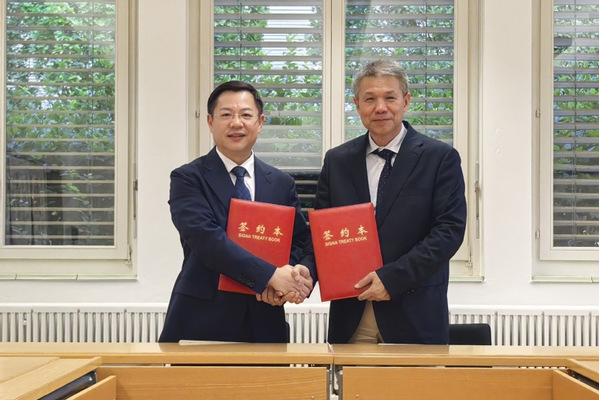

Signing the MoU with SWISS TCM UNI


This trip to Switzerland serves as an important measure for the university to actively connect with international organizations and deepen its overseas cooperation network. It is also a vivid practice of the university’s deep participation in global health governance and its efforts to enhance the international voice and influence of TCM. In the future, NJUCM will continue to uphold the concepts of openness, inclusiveness, and mutual learning, actively expand the space for international cooperation, and continuously promote the spread and development of TCM on the international stage with higher quality, at a deeper level, and across a broader scope.


Principal officials from the President’s Office, the Human Resources Office, the Graduate School, the Office of International Cooperation and Exchanges, and the School of Artificial Intelligence and Information Technology accompanied the delegation on the visit.


President Cheng Haibo Leads Delegation to Visit the WHO Headquarters and SWISS TCM UNI

发布时间: 2026-07-31 浏览次数: 10


From July 20 to 22, President Cheng Haibo led a delegation to Switzerland on an official visit to the World Health Organization (WHO) headquarters and the Swiss University for Traditional Chinese Medicine (SWISS TCM UNI). The visit aimed to further expand Nanjing University of Chinese Medicine’s (NJUCM) collaborative network with international organizations and in the field of overseas education, as well as to promote the in-depth global cooperation and high-quality development of Traditional Chinese Medicine (TCM). The delegation was warmly received by Dr. Kim Sungchol, Head of the WHO Traditional, Complementary and Integrative Medicine (TCIM) Unit, and other key officials.


Visiting the WHO Headquarters


President Cheng expressed his gratitude to WHO for its guidance and assistance regarding the work of NJUCM as one of the WHO Collaborating Centres for Traditional, Complementary and Integrative Medicine, as well as its care and support for the university’s overall development. He stated that NJUCM, as a leading institution of higher education in TCM in China, has always regarded promoting the international spread of TCM and global collaboration in traditional medicine as a crucial mission. Over the years, relying on the high-end platform of the WHO Collaborating Centre, the university has deeply participated in the formulation of international standards for traditional medicine, global talent cultivation, and mutual academic exchanges, achieving highly positive results. Looking to the future, the university expects to further deepen practical cooperation with WHO, contribute NJUCM’s wisdom in broader fields and at higher levels, and jointly promote traditional medicine to play a greater role in the global health governance system, providing strong support for achieving global health governance and sustainable development goals.


Dr. KIM Sungchol welcomed President Cheng and his delegation, fully affirming the outstanding achievements made by NJUCM. He expressed his expectation that both sides could expand into more dimensions of cooperation based on the existing foundation, jointly advancing the standardized and globalized development of traditional medicine.


The two sides engaged in in-depth discussions on cooperation regarding the university’s fulfillment of its functions as one of the WHO Collaborating Centres for Traditional, Complementary and Integrative Medicine and the expansion of TCM’s international influence.


At SWISS TCM UNI, President Cheng Haibo and Prof. Li Yiming, Rector of SWISS TCM UNI, exchanged in-depth views and reached a broad consensus on topics such as scientific research cooperation, joint graduate training, and the sharing of academic resources in the field of TCM. This laid a solid foundation for the subsequent deepening of international cooperation between the two universities. During the visit, the two sides signed a Memorandum of Understanding (MoU), marking a substantive new stage in their cooperation across TCM education, research, and cultural exchange.


Signing the MoU with SWISS TCM UNI


This trip to Switzerland serves as an important measure for the university to actively connect with international organizations and deepen its overseas cooperation network. It is also a vivid practice of the university’s deep participation in global health governance and its efforts to enhance the international voice and influence of TCM. In the future, NJUCM will continue to uphold the concepts of openness, inclusiveness, and mutual learning, actively expand the space for international cooperation, and continuously promote the spread and development of TCM on the international stage with higher quality, at a deeper level, and across a broader scope.


Principal officials from the President’s Office, the Human Resources Office, the Graduate School, the Office of International Cooperation and Exchanges, and the School of Artificial Intelligence and Information Technology accompanied the delegation on the visit.